To rank a website on Google in just one month may sound difficult, especially if your website is new. However, with the right SEO strategy, consistent effort, and quality content, you can improve your website’s visibility and start attracting organic traffic.
There is no guaranteed shortcut to reach the first position on Google. SEO takes time, but focusing on the right steps from day one can give your website a strong foundation.
There are the following activities to help rank a website quickly.
1. Choose the Right Keywords
The first step in SEO is finding keywords that people are actually searching for. Instead of targeting only highly competitive keywords, look for long-tail keywords that are more specific and easier to target. It is very useful for Ranking a Website.
For example, instead of targeting “digital marketing,” you could target:
- Digital marketing for beginners
- How to learn digital marketing
- Best digital marketing strategies for small businesses
Use keywords naturally in your title, headings, introduction, and throughout your content. Avoid using the same keyword too many times because keyword stuffing can make your content difficult to read.
2. Create Helpful and Original Content
Google wants to show users useful content that answers their questions. Your blog posts should provide real information instead of simply trying to manipulate search rankings.
When writing a post:
- Answer the main question clearly
- Use simple and easy-to-read language
- Add useful examples
- Break long sections into smaller paragraphs
- Use headings and bullet points
- Update information when necessary
Try to make your article more useful than the pages already ranking for your target keyword.
3. Optimize Your WordPress Website
WordPress makes SEO easier, but you still need to optimize your website properly which directly helps in ranking a website.
Make sure every important page has:
- An SEO-friendly title
- A clear meta description
- A short and readable URL
- Proper H1, H2, and H3 headings
- Optimized images
- Internal links
- Mobile-friendly design
Your website should also load quickly. A slow website can create a poor experience for visitors and may affect your SEO performance.
4. Build Internal Links
Internal linking means linking one page of your website to another relevant page it is very useful for Ranking a Website.
For example, if you write an article about SEO, you can link it to another article about keyword research or content marketing.
Internal links help visitors discover more content and also help search engines understand the structure and relationship between your pages.
Whenever you publish a new article, look for older relevant articles where you can naturally add a link.
5. Get Quality Backlinks
Backlinks are links from other websites pointing to your website. Quality backlinks can help improve your website’s authority and improves rank of website.
However, don’t focus on getting hundreds of random links. A few relevant and trustworthy backlinks can be more valuable than many low-quality links.
You can try:
- Writing guest posts
- Creating useful resources
- Publishing original research
- Building relationships with bloggers
- Promoting your content on relevant platforms
Never buy large numbers of spammy backlinks simply to increase your link count.
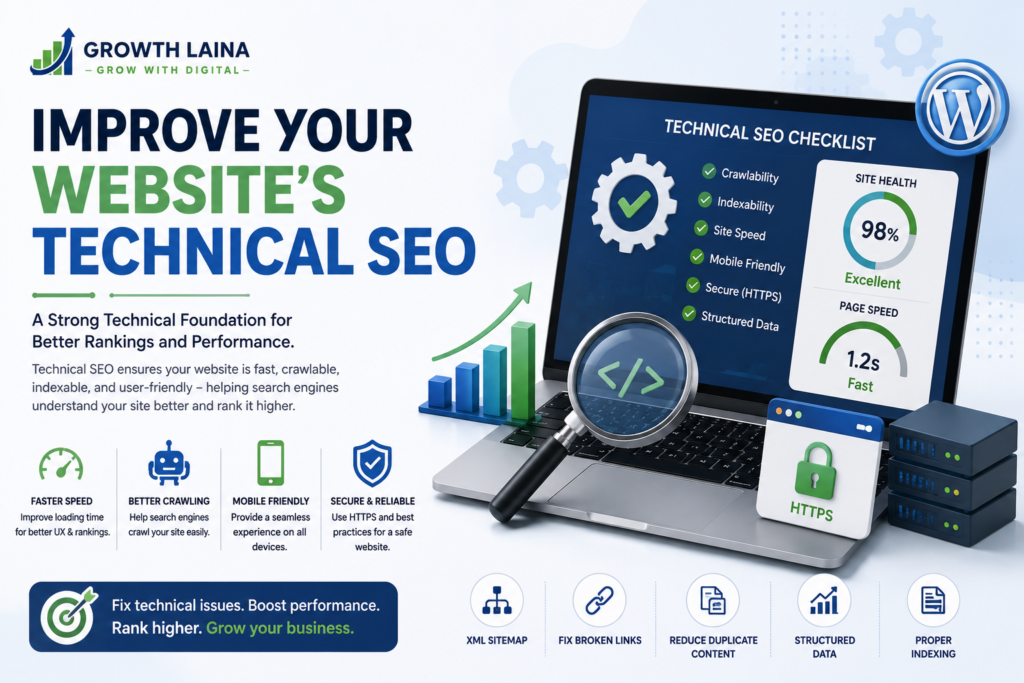
6. Improve Your Website’s Technical SEO
Technical SEO helps search engines crawl and understand how to rank a website.
Check that:
- Your website uses HTTPS
- Important pages can be indexed
- Your XML sitemap is available
- Broken links are fixed
- Your website works well on mobile devices
- Images are properly optimized
- Pages load quickly
You should also connect your website to Google Search Console. It can help you see how Google discovers and indexes your pages and identify potential issues.
7. Promote Your Content to Rank a Website
Publishing an article and waiting for visitors is usually not enough, especially for a new website.
Share your useful content through relevant social media platforms, online communities, email newsletters, and other channels where your target audience spends time.It directly rank a website.
The goal is not simply to get clicks. You want to put your content in front of people who may genuinely find it useful and share or reference it.
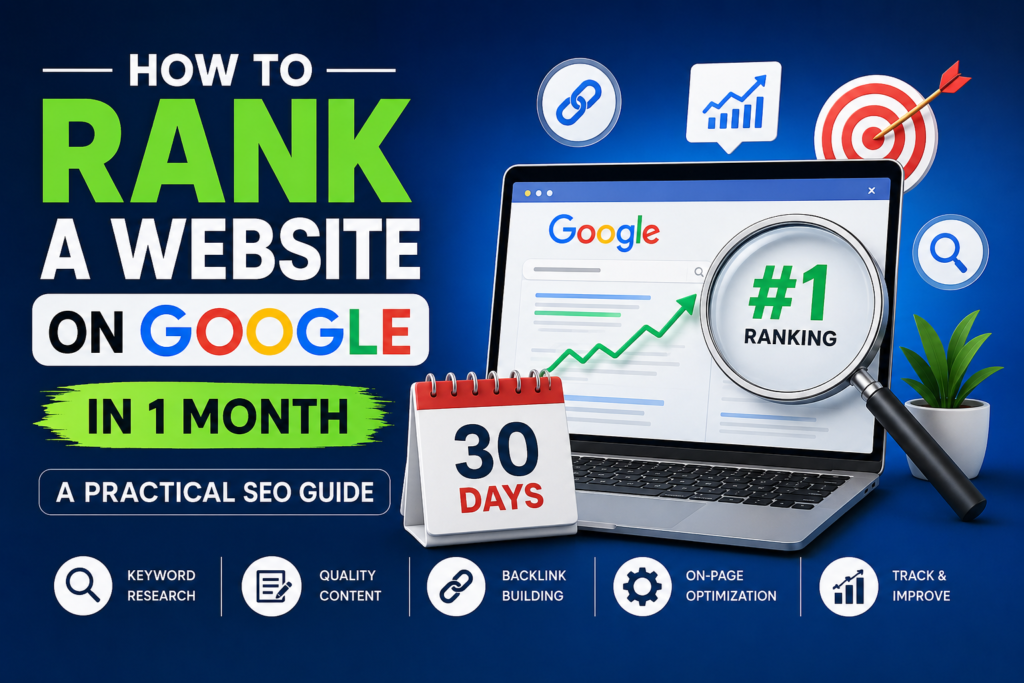
8. Follow a 30-Day SEO Plan to Rank a Website
A simple one-month SEO plan can help you stay organized.
Week 1: SEO Foundation to Rank a Website
- Set up Google Search Console
- Research your target keywords
- Check your website structure
- Optimize important pages
- Create a list of content ideas
Week 2: Publish Quality Content to Rank a Website
Publish several useful articles based on your keyword research. Focus on answering specific questions instead of writing articles just to reach a certain word count.
Make every article easy to read, properly structured, and useful to your audience.
Week 3: Internal Links and Promotion to Rank a Website
Connect your new articles with relevant older content. Then promote your best articles through appropriate channels.
Start building relationships with websites and creators in your niche.
Week 4: Analyze and Improve
Check your Google Search Console data to see which pages and keywords are receiving impressions and clicks.
If an article is getting impressions but very few clicks, consider improving its title and meta description.
If a page is receiving traffic but visitors are not finding what they need, improve the content and user experience.
Can You Really Rank a Website on Google in One Month?
Yes, a website can sometimes start ranking for certain keywords within a month, particularly when the keywords have low competition and the content is highly relevant.
However, reaching the top position for competitive keywords can take much longer. SEO is not a guaranteed one-month process.
Instead of focusing only on “ranking in one month,” focus on building a website that Google and users can trust over the long term.
Final Thoughts
Ranking a website on Google requires patience, useful content, technical optimization, keyword research, internal linking, and consistent promotion.
If you have a new WordPress website, use the first month to build a strong SEO foundation. Choose realistic keywords, publish genuinely helpful content, optimize your pages, and regularly check your performance.
You may not reach the first position immediately, but the work you do today can create a foundation for more organic traffic in the months ahead.
Remember: SEO is not about finding a shortcut. It is about creating a better website and giving people the information they are looking for.